
Real-World Data Are Already Transforming Healthcare Research. Here’s What Still Has to Change.
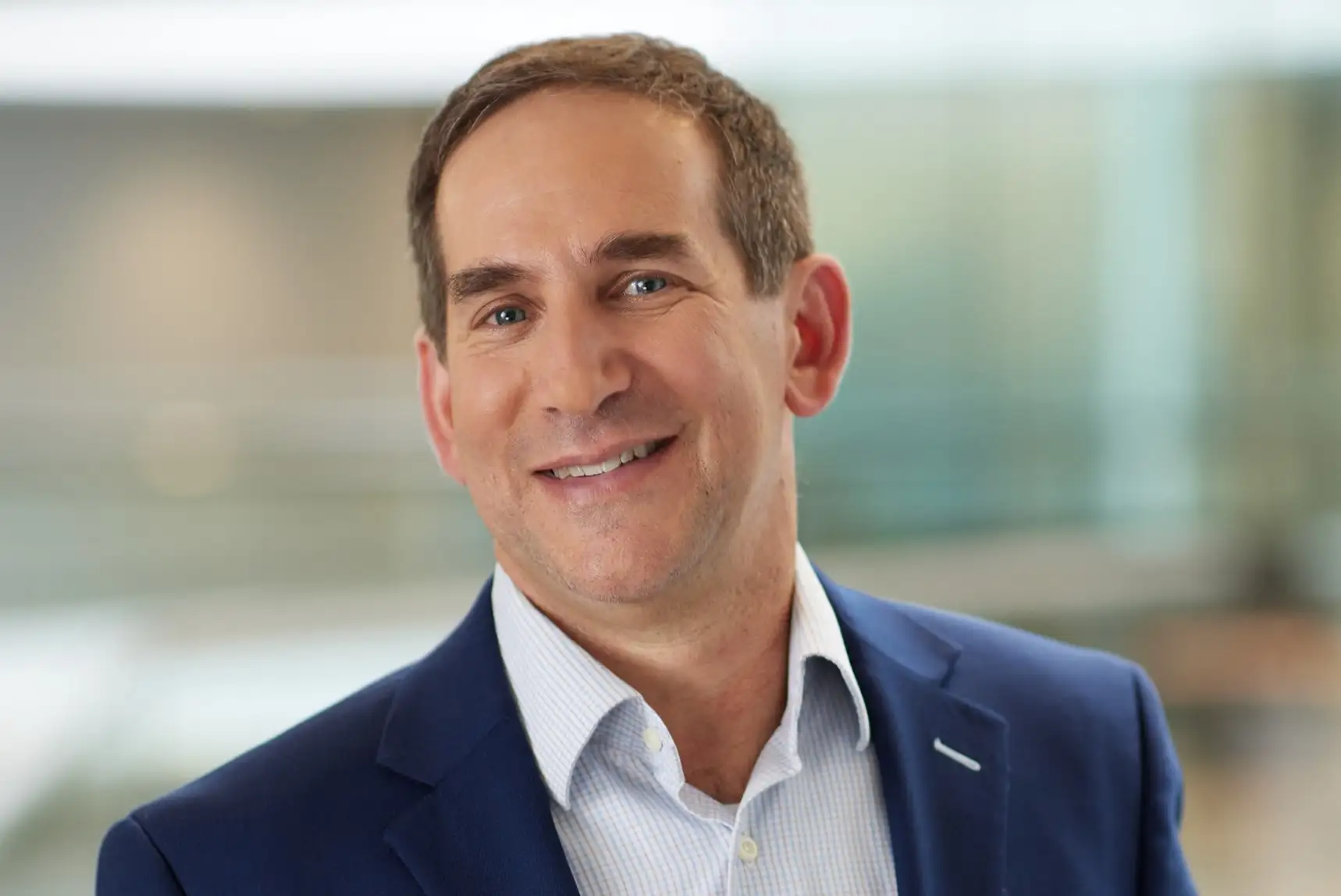
I recently had the chance to sit down with Will Salerno, Executive Director of Genome Informatics and Data Engineering at the Regeneron Genetics Center (RGC), for an episode of the Nucleus by Regeneron podcast. We covered a lot of ground including how I ended up in the real-world data (RWD) space, what the TriNetX-Regeneron collaboration is about, where the biggest gaps in RWD are today, and where I think we’ll be 10 years from now. I came away from the conversation energized, and I wanted to share a few of the ideas that I think are worth sitting with.
What is RWD?
This question came up early, and I think it’s worth spending a moment on because the term gets used loosely.
RWD are the data collected as part of routine care. They aren’t designed for research, but enormously useful for it. When you see your doctor, your care is documented in an electronic health record (EHR) if we’re lucky and in a paper chart if we’re not. When your provider submits a bill to your insurer, that becomes a medical claim for reimbursement. Those are the two big buckets of RWD — EHR and claims. But the number of data sources is expanding. State immunization, cancer, birth, and death registries all count. Genomic testing data are increasingly in the mix. Even data from a wearable device could qualify.
I often joke that some people describe this as the “exhaust” of the health system; the information left behind as care happens. Will suggested “residue,” which I think is a bit more dignified. Whatever you call it, the point is that these data weren’t collected for research, but we can learn an enormous amount from them if we approach it rigorously.
Why Scale Matters, But Isn’t the Whole Story
A question Will pressed me on, and rightly so, is the relationship between scale and research value. TriNetX has access to data on roughly 300 million patients across more than 200 healthcare organizations globally. Why do you need numbers like that?
The honest answer is that you usually don’t need all of it for any single study. What you need is a large enough starting population — often within each country of interest — to whittle down to the precise cohort your question requires. If you’re studying a common condition like hypertension, you’ll have plenty of patients. But once you start layering on criteria (specific drug history, comorbidities, age ranges, geographic diversity) populations shrink fast. And if you’re working in rare disease or studying a specific genetic variant, you may need to search across tens of millions of records just to find a few hundred relevant patients.
Scale also matters for generalizability. In the U.S., if your data come entirely from academic medical centers on the coasts, your findings may not apply to patients being treated at rural community hospitals. Part of what we’re actively working on at TriNetX is expanding our footprint to include more diverse care settings, not just adding more patients, but adding different kinds of patients.
The Two Biggest Gaps
Will asked me where I think the biggest unmet needs are in the RWD space right now. Two things came to mind.
The first is global data. The U.S. has a legal and regulatory environment that allows for meaningful data liquidity, with rules that make it feasible to aggregate and study health data at scale. That’s much harder in Europe and in many other parts of the world. The barriers aren’t technical. We have the infrastructure. The barriers are governance and policy (e.g., different rules about what data can be accessed, by whom, and for what purposes). Closing that gap requires sustained engagement with regulators and policymakers, not just engineers.
The second is data depth. We’ve gotten quite good at working with structured data including diagnoses, procedures, medications, and labs. The next frontier is richer, harder-to-access information including clinical notes, genomic and multiomic data, and linkages to disease registries. That information exists in pockets and databases all over the world. The challenge is accessing it responsibly, standardizing it, and making it useful for research. That’s the work.
Genomics and the Promise of Precision Medicine
The conversation with Will got particularly interesting when we turned to genomics, which is central to what Regeneron and the RGC do. The short version of my view is that genomic data are going to be transformative, but we’re at the very beginning of figuring out how to use them in a RWD context.
More patients are being tested today than ever before, and that testing generates data that are sitting in small, fragmented databases that are often not being used for research. That’s the same situation EHR data were in not that long ago. The opportunity is to unlock those data for new discoveries, better treatment selection, and more precise understanding of who responds to what and why.
Imagine a clinician knowing, before they prescribe anything, that a particular patient is unlikely to respond to Drug A but likely to respond to Drug B. That’s the direction the science is pointing. Getting there requires large, diverse, deeply characterized patient populations. And it requires matching those populations with genomic profiles so we can see patterns that no individual clinician’s patient panel would ever reveal.
One thing Will said struck me. You don’t necessarily need to understand the complete biological pathway to act on a statistical signal if the evidence base is large enough and the population diverse enough. That’s true. And it’s also a reason to be thoughtful, because associations in data are not always what they appear to be. Which brings me to artificial intelligence (AI).
Cautious Optimism, With Emphasis on the Optimism
This is a topic I feel strongly about. My starting point is cautious optimism, but I want to be clear that the optimism is real, not hedging.
About 10 or 15 years ago, we thought powerful computers would generate all kinds of wonderful insights from health data. What they mostly generated was noise. The reason is that there was no way to incorporate the context of how and why the data were collected. The machine could find patterns, but it couldn’t tell the difference between a meaningful pattern and an artifact of documentation practices at a particular hospital in a particular country.
AI is genuinely better at this now, and there are specific applications where I think it will be enormously valuable.
Data standardization is one. At TriNetX, we’re already using AI to help harmonize how prescription medications are recorded across different health systems and countries. The logic is simple. Let the AI flag the 10 percent of cases that look unusual and then put a human expert on those cases. The human isn’t looking at the 90 percent of cases that are fine. This is a meaningful efficiency gain.
Hypothesis generation is another. AI can surface associations in large data sets that would be impossible to find any other way. Those associations need to be validated. You still need epidemiological rigor and clinical judgment to know whether a relationship is real and meaningful, and to help understand the direction of the relationship. But surfacing the hypotheses faster is genuinely useful.
Privacy and de-identification is a third area. One concern that Will raised, which I think is underappreciated, is that combining two de-identified data sets doesn’t automatically produce a de-identified result. “Anonymous plus anonymous is not always anonymous.” AI can help assess re-identification risk as data sets are linked, and in federated architectures where data stay in place rather than being moved, it can help answer research questions without ever requiring anyone to touch raw patient records directly.
Where I Hope We Are in 10 Years
Will asked me a simple closing question. What do you hope is different 10 years from now?
One thing is governance and trust. The technical infrastructure to do population-scale health research exists or is being built. What slows us down is friction in the system, including uncertainty about what is allowed, reluctance from patients and providers, and inconsistency across regulatory environments. A lot of good work is happening here, with the National Institutes of Health (NIH) and others investing in frameworks that could help. If we can reduce that friction meaningfully over the next decade, the research will accelerate.
Another is data availability and access. In 10 years, I would hope that data are available, secure, and liquid in the sense that you can study the data without moving it. This involves federated approaches, privacy-preserving analytics, and AI-assisted querying. The goal is a world where a researcher can ask a question of a global population and get a reliable answer without anyone having to extract, ship, or aggregate raw patient records. That’s the future worth working toward.
Interested in the full conversation?
Listen to the episode of the Nucleus by Regeneron podcast featuring our discussion on RWD, genomics, AI, and the future of population-scale research.
About Jeffrey Brown, PhD
With more than 25 years of experience in research and consulting, Jeff is an internationally recognized expert in the use of real-world data to support the evidentiary needs of regulatory agencies and medical product sponsors, and an expert in the assessment of data quality of real-world data resources.
Related Articles