Preparing for EHDS Readiness: How European Healthcare Organizations Can Build Interoperable Research Data Infrastructure
Key takeaways:
- EHDS is raising the bar for how European healthcare organizations structure, govern, and reuse health data for approved secondary-use purposes.
- OMOP CDM, FHIR, and other interoperable standards can give organizations a practical foundation for data quality, interoperability, and scalable research collaboration.
- TriNetX helps reduce the internal burden of transforming healthcare data into research-ready, interoperable formats, supporting EHDS preparation while creating a path to greater research value.
Across Europe, healthcare organizations are entering a critical planning period as the European Health Data Space (EHDS) secondary-use framework takes shape across national implementation plans. The European Health Data Space (EHDS) Regulation is creating stronger expectations for how electronic health data are structured, governed, and made available for approved secondary-use purposes. For many healthcare organizations, one of the most immediate and practical questions is simple: how do we transform fragmented clinical data into interoperable, research-ready infrastructure that can support regulatory expectations, research collaboration, and long-term institutional value?
Research readiness is not about committing to a single data model. It is about having the flexibility to support the standards that enable interoperability, regulatory compliance, and research collaboration. Today, many organizations are leveraging the OMOP Common Data Model (OMOP CDM) to standardize health data for analytics and research, while also preparing for broader interoperability requirements that may include Fast Healthcare Interoperability Resources (FHIR) and other standards. As EHDS implementation continues to evolve, TriNetX helps healthcare organizations prepare for that future by supporting OMOP, FHIR-aligned interoperability needs, and other frameworks as requirements evolve.
EHDS is Making Research Data Infrastructure a Strategic Priority
EHDS is more than a policy milestone; it is a catalyst for infrastructure decisions. Healthcare organizations will need to prepare for an environment where secondary use of health data is increasingly structured around discoverability, interoperability, secure processing, governance, and data quality. This creates a practical burden for organizations that already face constrained IT, informatics, legal, and research office resources.
The organizations that move early will be better positioned to understand their gaps, reduce operational risk, and turn their health data into a more usable research asset. Waiting until technical standards and national workflows are fully mature may leave healthcare organizations reacting under pressure rather than shaping their own readiness path.
Why OMOP CDM is Central to EHDS Readiness
OMOP CDM has become one of the most important models for secondary-use health data because it provides a standardized way to structure clinical information for analysis. For healthcare organizations, OMOP readiness can help reduce the burden of one-off data preparation and make research data more consistent, reusable, and comparable.
Getting data into OMOP CDM is not simply a technical conversion. It requires terminology mapping, data quality validation, ongoing maintenance, documentation, and governance alignment. That is why many healthcare organizations need more than software; they need a practical partner that understands healthcare data, research workflows, and the trust requirements that surround patient data.
How TriNetX Helps Get Data into OMOP CDM
TriNetX helps healthcare organizations transform and harmonize clinical data into interoperable, research-ready formats through a turnkey research data environment approach that spans four key areas. This approach gives organizations a structured way to support OMOP CDM readiness, FHIR-aligned interoperability needs, and future standards while reducing the internal burden on informatics, research, and governance teams.
-
Terminology and mapping support:
Aligns local clinical vocabularies and institution-specific data structures to internationally recognized research standards, including LOINC, SNOMED CT, RxNorm, local codes, and FHIR-aligned requirements where applicable.
-
Continuous data quality monitoring:
Monitors data quality through automated observability processes that assess conformance, completeness, and plausibility, helping organizations identify data drift, anomalies, and quality issues before they impact research activities.
-
Governance preparation:
Documents and operationalizes the processes needed for trustworthy secondary-use readiness while maintaining local control and governance.
“European HCOs are entering a vital planning period for research data readiness,” said Steve Lethbridge, Senior Vice President, Global Healthcare Partnerships at TriNetX. “TriNetX’s expertise is reflected in a harmonized global network representing more than 300 million patient lives, with data mapped to internationally recognized terminology standards that support the OMOP CDM and FHIR. This foundation can help institutions advance data quality, improve research readiness, and position themselves for the opportunities emerging through the EHDS.”
From Readiness to Research Value
The strongest EHDS strategy does not stop at preparation. An OMOP-ready research data environment can become a strategic asset. Once healthcare data is structured and maintained in OMOP CDM, it can support privacy-preserving federated research workflows, clinical trial feasibility, and broader collaboration with life sciences sponsors and research partners.
“This is about more than compliance,” said Jeffrey S. Brown, PhD, TriNetX’s Chief Scientific Officer. “An OMOP-ready research environment can help HCOs transform fragmented clinical data into a governed, high-value asset. In doing so, they can expand access to research collaborations, attract new funding opportunities, and increase participation in clinical trials and other research programs, all while adhering to strong security and governance frameworks that ensure physical and operational control over all patient and institutional data.”
This is where TriNetX is differentiated. TriNetX pairs data standardization and EHDS readiness with a global federated research network that supports privacy-preserving research, feasibility assessments, clinical trial opportunities, and collaboration across healthcare organizations, life sciences companies, and research partners. HCOs may also choose to make their data available for research through participation in the TriNetX LIVE™ Network using data-sharing approaches designed to preserve local control and governance. Unlike standalone data conversion providers, TriNetX helps organizations not only prepare their data, but also realize its long-term research value.
Why Network-Scale Harmonization Matters
Getting data into OMOP CDM is only one part of creating a research-ready environment. The greater challenge is ensuring data are standardized, mapped, validated, and maintained in ways that support meaningful research across institutions and countries.
TriNetX brings experience gained from harmonizing data across a global network representing more than 300 million patient lives. The platform maps diverse clinical vocabularies, terminologies, and data structures to internationally recognized standards that support OMOP CDM, FHIR, and other interoperability needs while maintaining consistency across healthcare systems, research environments, and geographic regions.
This network-scale experience helps healthcare organizations accelerate readiness while avoiding many of the operational challenges associated with maintaining interoperable research data infrastructure.
Looking Ahead
EHDS is accelerating an important shift in European healthcare data strategy. Healthcare organizations that invest in OMOP CDM readiness now can reduce future operational burden, improve data usability, and prepare for a more connected research ecosystem. TriNetX helps organizations take that step by getting data into OMOP CDM and building the foundation for trusted, privacy-preserving research collaboration.
Learn how TriNetX can help your organization transform clinical data into OMOP CDM, support broader interoperability needs, and prepare for the EHDS era. Download the EHDS readiness one-pager or connect with our team to learn more.
About Steve Lethbridge
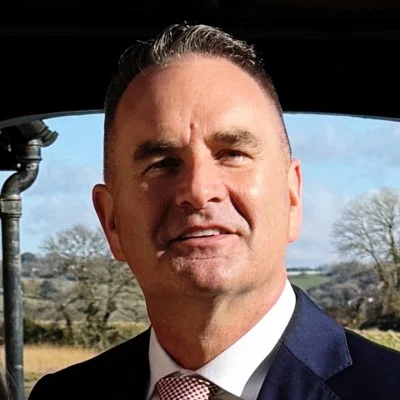
As SVP, Global Healthcare Partnerships at TriNetX, Steve leads the global teams responsible for developing and deepening TriNetX’s partnerships with healthcare providers and academic research institutions. He brings more than 25 years of experience spanning healthcare ICT, real-world data, clinical research, and consulting, and has been with TriNetX for 11 years.
Related Articles